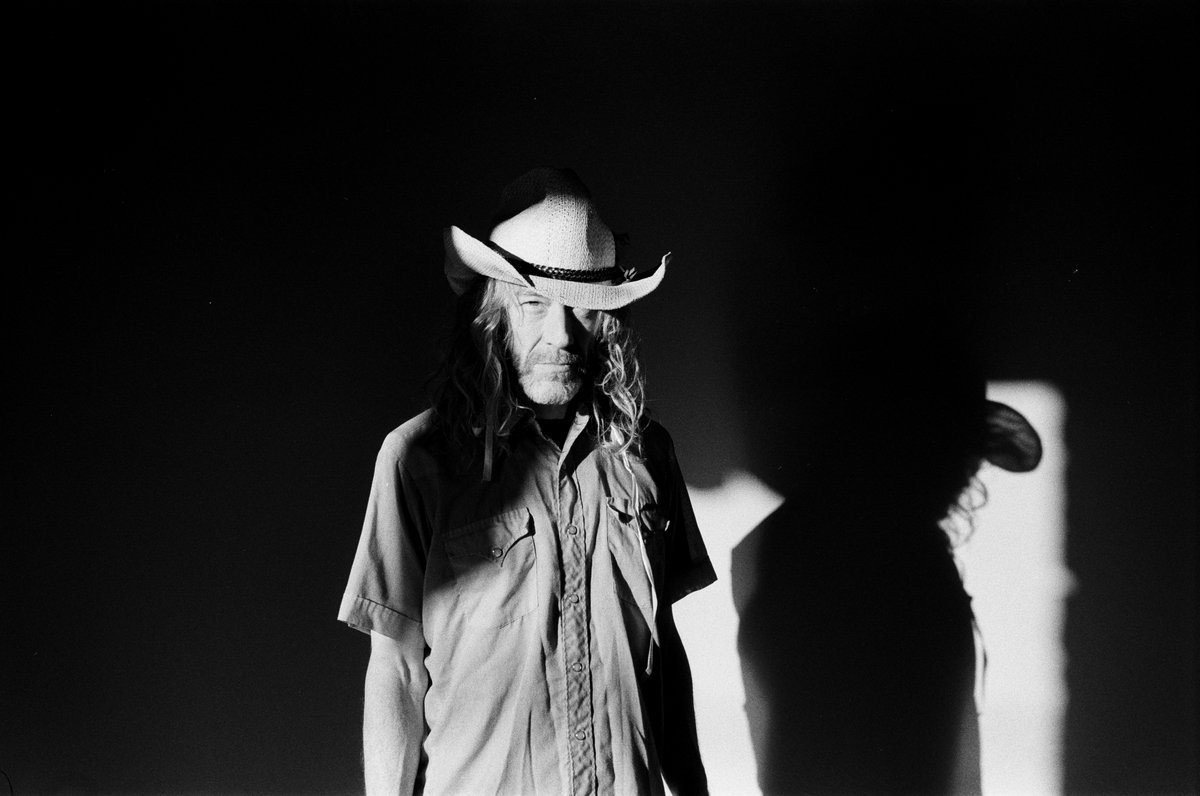
Earlier this spring, I was struck by the music video for Alan Sparhawk’s new single “Not Broken,” which features the Low band member contemplating life beside wavy waters. I wrote about it in last week’s newsletter on the waves of grief:
Alan Sparhawk of the band Low just released his second solo album—this time with accompaniment from the band Trampled by Turtles and appropriately titled With Trampled by Turtles. It’s a unique paring—Low’s music is part of the slowcore genre and Trampled by Turtles is known for their blisteringly fast bluegrass. Back in 2022, Sparhawk lost his wife and bandmate Mimi Parker to cancer. After Parker’s death, Trampled by Turtles invited Sparhawk to sit in with them on some of their shows. Both bands being from Duluth, it was an easy way they could show up for their longtime friend and support him during his grief. In this moving and insightful Stereogum interview, Sparhawk discusses his first solo album White Roses, My God—along with his experience grieving the loss of Parker. One of the singles from his new album is “Not Broken.” Its chorus features a female vocalist—sounding uncannily like Parker—who sings over and over again, “It’s not broken. I’m not angry.” This vocalist, it turns out, is the daughter of Sparhawk and Parker—Hollis. The music video for the song shows Sparhawk continuing to grieve Parker beside bleak, choppy waters—but with a hint that he’s finding his way into healing, that he and Hollis are not broken and not angry, despite their pain. As grief goes on, that’s a hopeful place to be.
You can check out the music video for “Not Broken” here:
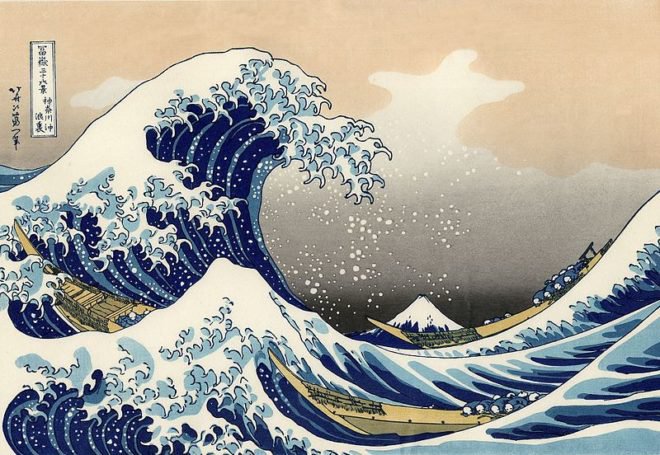
The Great Wave off Kanagawa, by Katsushika Hokusai – Image via Open Culture
I like being in and around water. With its many lakes and rivers, my home state of Wisconsin provides ample opportunities to enjoy it. There aren’t any oceans, of course, but the expansive Lake Superior to the north and Lake Michigan to the east evoke the illusion of one. Standing on those shores, your gaze finds no land on the horizon, and the waters can swell into waves that are big enough to surf.
These deep waters conjure the unknown. One of my favorite lines from the Harry Potter books comes from Dumbledore, as he and Harry are crossing the dark waters of a sea cave to locate one of Voldemort’s Horcruxes:
There is nothing to be feared from a body, Harry, any more than there is anything to be feared from the darkness. It is the unknown we fear when we look upon death and darkness, nothing more.
The first thing you see in the famous image is the foreboding wave, suspended in midair and ready to crash. But a closer look reveals three fishing boats being tossed about on the tumultuous sea, along with a small Mount Fuji in the distance. The way in which the great wave overshadows Mount Fuji—a sacred symbol of Japanese resilience and strength—is significant. Hokusai intended it as a commentary on how Japan was becoming more open to western influences—a time of instability and uncertainty for the country that had firmly closed its doors to such influences for over two hundreds years. The sea that protects life in Japan also has the capacity to engulf it. The vivid “aliveness” of the wave itself is “the embodiment of Hokusai’s belief that Art has a life of its own—a life force.”
Certain things in life, like Art, have their own life force—things like Love and Grief. As much as we’ve advanced as humans, there’s still a lot that we don’t understand about these two related emotions—and about Grief, in particular. Grief remains as unexplored as the ocean, as chaotic as the waves crashing. It’s not until we’re plunged into its depths or tossed about by its waves that we truly come to know Grief.
In her book The Year of Magical Thinking, Joan Didion recounts the harrowing year following her husband’s sudden, unexpected death. She describes how Grief “comes in waves”:
Grief, when it comes, is nothing like we expect it to be. … Grief has no distance. Grief comes in waves, paroxysms, sudden apprehensions that weaken the knees and blind the eyes and obliterate the dailiness of life. Virtually everyone who has ever experienced grief mentions this phenomenon of ‘waves.’
Author Elizabeth Gilbert also compares Grief to a “wave”—or rather, a “tsunami”—while discussing the loss of her life’s partner in a TED interview. With raw insight, she explains how Grief is connected to Love through how we handle such waves when they hit:
I have learned that Grief is a force of energy that cannot be controlled or predicted. It comes and goes on its own schedule. Grief does not obey your plans, or your wishes. Grief will do whatever it wants to you, whenever it wants to. In that regard, Grief has a lot in common with Love.
The only way that I can ‘handle’ Grief, then, is the same way that I ‘handle’ Love—by not ‘handling’ it. By bowing down before its power, in complete humility.
When Grief comes to visit me, it’s like being visited by a tsunami. I am given just enough warning to say, ‘Oh my god, this is happening RIGHT NOW,’ and then I drop to the floor on my knees and let it rock me. How do you survive the tsunami of Grief? By being willing to experience it, without resistance.
Both Didion and Gilbert have faced realities of loss that seem unimaginable to those who have not gone through them. But psychotherapist and grief advocate Megan Devine cautions that a key problem with how our culture approaches grief isn’t an inability to imagine that kind of pain, but a fear of doing so—we can imagine it, but we don’t want to. Rather than face such tremendous pain alongside those going through it, we turn away from it. According to Devine, this results in us failing to connect with those in grief. Pain is a reality of being human. To ignore that potential for ourselves—or our loved ones who are experiencing it—is to deny what it means to be fully human. And for those treading in their darkest waters, it only adds to their suffering.
Grief no more needs a solution than love needs a solution. We cannot ‘triumph’ over death, or loss, or grief. They are immovable elements of being alive. If we continue to come at them as though they are problems to be solved, we’ll never get solace or comfort for our deepest pain.
Instead of treating grief as a problem to be fixed, Devine proposes that we simply allow it to exist. The only way to handle grief’s waves is to let them wash over you. Educator Parker Palmer says that “the human soul doesn’t want to be advised or fixed or saved. It simply wants to be witnessed, exactly as it is.” By acknowledging and bearing witness to the pain of those in grief—by swimming in the dark and wavy waters alongside them—we help them know that things can be made better, even though they can’t be made right. There’s no turning back, no jumping forward, and no skipping around. The only way out is through—with a willingness to let the waves move you as they will—as you find a way to live this new reality that has met you.
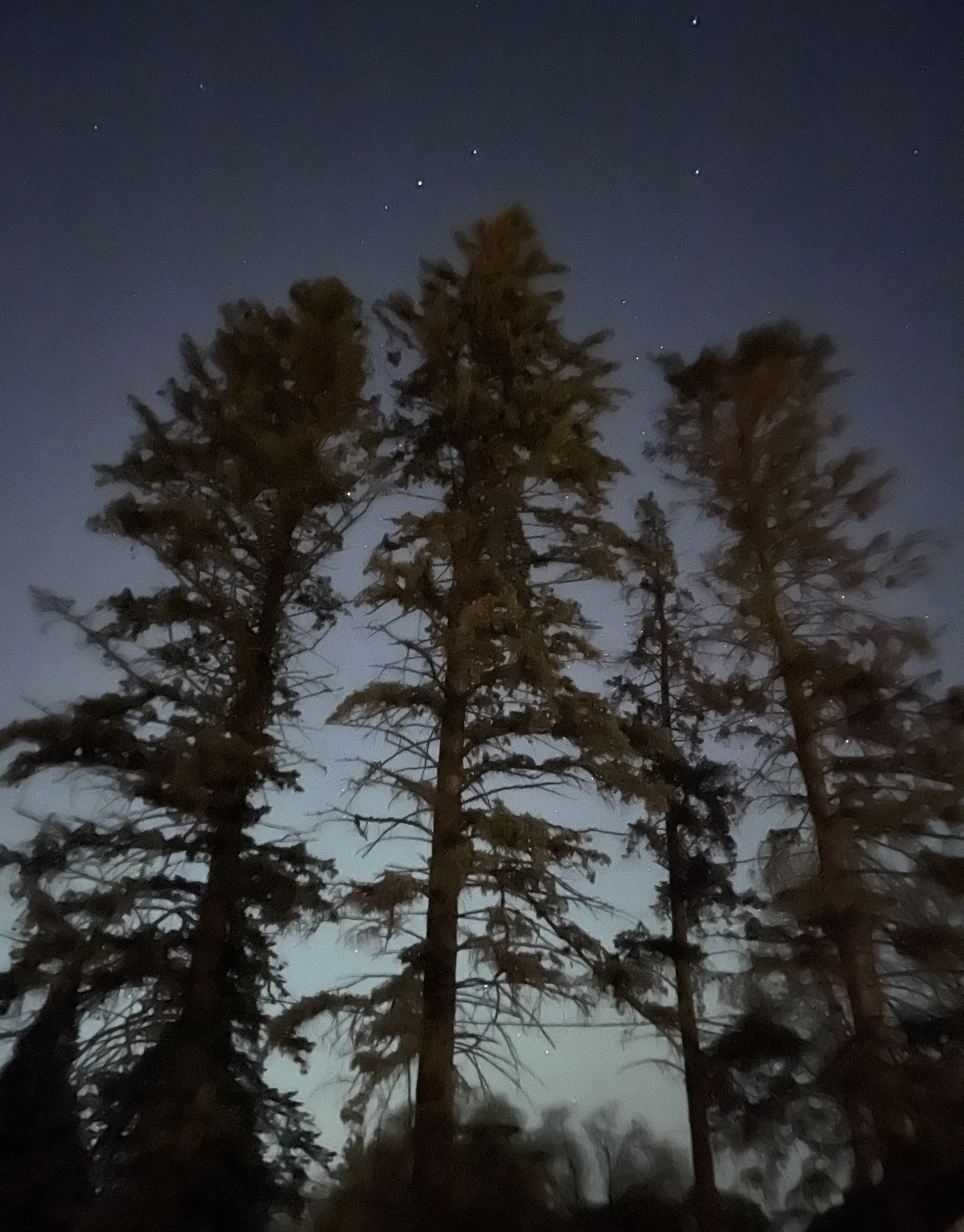
Pine trees in our Wisconsin backyard under the Northern Lights (May, 2024)
Right after the presidential election last November, I wrote about having more empathy for one another. In the post, I suggested “suspending judgement” when it comes to interacting with someone who believes differently than you.
I don’t know about you, but I’m finding a lot of people who think differently than me. I see them online, in my local community, and in different parts of the world—each with their unique experience and perspective. More often than not, the interactions I observe in these spaces are pretty negative and nonconstructive.
This past week, I was thinking about how to navigate different perspectives while also keeping my sanity. For sure, there’s a time when it’s better to disengage from it all—or, as Austin Kleon would describe it, to plant your garden. But then there’s a time to engage with it and to listen. Rick Rubin writes about this in his book The Creative Act: A Way of Being:
We often take shortcuts without knowing it. When listening, we tend to skip forward and generalize the speaker’s overall message. We miss the subtleties of the point, if not the entire premise. In addition to the assumption that we are saving time, this shortcut also avoids the discomfort of challenging our prevailing stories. And our worldview continues to shrink.
So many of today’s problems are the result of people avoiding the good friction that is produced from engaging in discussions that expand our worldview. Rubin’s comments reminded me of an old friend I had in grad school. Whenever I talked with Peter, I could tell that he was listening to me so authentically hard—not in the “active listening” sense, but more of a completely-and-silently-focused sense—that I always felt challenged to really pay attention to what I was saying, in a good way, to make sure it all added up. I had to clearly express myself and I knew if I didn’t, I’d be met with a thoughtful follow-up question because Peter truly wanted to understand my perspective.
Like many, I loved Ted Lasso. One of my favorite scenes from the series is when Ted takes on Rupert in a game of darts to prevent him from tormenting Rebecca in the owner’s box. Before sealing his victory with three extremely difficult shots, Ted calls out Rupert’s air of superiority and invites him to be more curious.
In the clip, Ted quotes Walt Whitman: “Be curious, not judgmental.” While it turns out Whitman didn’t actually say this, the message rings true. Curiosity is valuable. It’s a perspective and orientation toward life that grows your worldview.
In his book Show Your Work, Austin Kleon quotes some thoughts that C.S. Lewis penned for his introduction to Reflections on the Psalms (1958). Here’s Lewis:
I write for the unlearned about things in which I am unlearned myself. It often happens that two schoolboys can solve difficulties in their work for one another better than the master can. When you took the problem to the master, either he was so fluent in the whole subject that he could not understand the difficulty, or he had forgotten what it was like to be puzzled by it. The fellow-pupil can help more than the master because he knows less. The difficulty we want him to explain is one he has recently met. The expert met it so long ago that he has forgotten.
As a teacher, I love this quote. I love that teaching is a reflective practice. You’re always a student of the profession, even as you become a seasoned professional. It’s a dynamic job that you can always build upon. You never arrive, which can be frustrating at times, but in the end I think is what makes it such a worthwhile pursuit. Teachers inspire curiosity and the good ones continue to be curious themselves.
Our experience is valuable but how does it compare to a beginner’s mindset? What limiting beliefs have emerged as a result of our self-confidence in our abilities and our experiences?
As it were, the very next chapter I read in Rubin’s book was entitled “Beginner’s Mindset.” In the chapter, he tells a story about the board game Go, which is said to be around 4,000 year old.
Go is one of the most complex games ever created by humans. There are more possible board configurations in Go than there are atoms in the universe. Back in 2014, the artificial intelligence research company DeepMind started development on an AI system that would be capable of solving complex problems. They called it AlphaGo and intended it to take on the best Go players in the world. But the way they designed AlphaGo to learn the game was unique. DeepMind co-founder and CEO Demis Hassabis described it like this:
Traditional games engines comprise thousands of rules handcrafted by strong human players that try to account for every eventuality in a game. The final version of AlphaGo does not use any rules. Instead it learns the game from scratch by playing against different versions of itself thousands of times, incrementally learning through a process of trial and error, known as reinforcement learning. This means it is free to learn the game for itself, unconstrained by orthodox thinking.
Two years later, AlphaGo had taught itself enough to take on legendary Go player Lee Sedol. More than 200 million people from around the world tuned in for the televised event. During the game, AlphaGo made a series of unconventional moves, which culminated in move 37, a completely unique and creative move that no human professional would ever have made. Professional Go player Fan Hui said the follow of move 37:
Move 37 goes against all conventional teaching and no experienced human player would ever have played it. In fact, we know from AlphaGo’s calculations there was just a one in ten thousand chance of a player selecting that move. It was a moment of inspiration that came from its unique approach to the game. Unlike the way I — and all other human players — approach Go, its decisions are unencumbered by the tradition, theory, and teaching of human play. Instead, it learns the game for itself, giving it the opportunity for fresh thinking and leading to a unique ‘free spirited’ style which in turn has unshackled human players from tradition and allowed us to also think differently about the game.
AlphaGo’s success speaks to the power of a beginner’s mindset that isn’t limited by culture, tradition, or experience. It’s a fascinating story, which you can read more about on this Google Arts & Culture page. There’s also a documentary about it that’s available for free streaming here.
Rubin concludes with this about the AlphaGo story:
There’s a great power in not knowing. When faced with a challenging task, we may tell ourselves it’s too difficult, it’s not worth the effort, it’s not the way things are done, it’s not likely to work, or it’s not likely to work for us. If we approach a task with ignorance, it can remove the barricade of knowledge blocking progress. Curiously, not being aware of a challenge may be just what we need to rise to it.
Jason Kottke references this too, in a post called “Ignorance and the curious idiot.” Bringing it back to Ted Lasso, Kottke writes about how the creative team initially came up with the idea for the show—they wondered, “What if we did a show where the main character was an ignorant guy who was actually curious?” Kottke goes on to link curiosity with paying attention, and paying attention with love.
I like the idea of emptying ourselves so we can learn, of seeking simplicity in the midst of life’s complexities, and of paying attention as a form of love. I like remaining curious, suspending judgment, and having a beginner’s mindset.
In the end, there’s so much we don’t know and that’s okay. Maybe it’s enough not to know. And maybe it’s better to know that much than to think we know more than we actually do. One of my favorite songs from the Canadian band The Sadies is “Why Be So Curious?” I think it’s a good and peaceful place to wrap this up. The lyrics go like this:
Feelin’ me the sun, glow so big and warm upon everyone Be the tallest tree, grow as rain falls down upon everyone Look at the clouds and the stars as they glow Why be so curious when nobody knows… The truth
Hear the birds all sing, the most beautiful things hear what they sing Feel the love you feel, don’t poison the well with worry and fear Look to the simple and be like the snow Why be so curious when nobody knows… The truth
Watch the river flow, as you get right in and feel the love flow Move along the way, float with care and ease off to the seas
Look at your fingers and look at your toes Why be so curious when nobody knows? Nobody knows… The truth
ABOUT THE AUTHOR
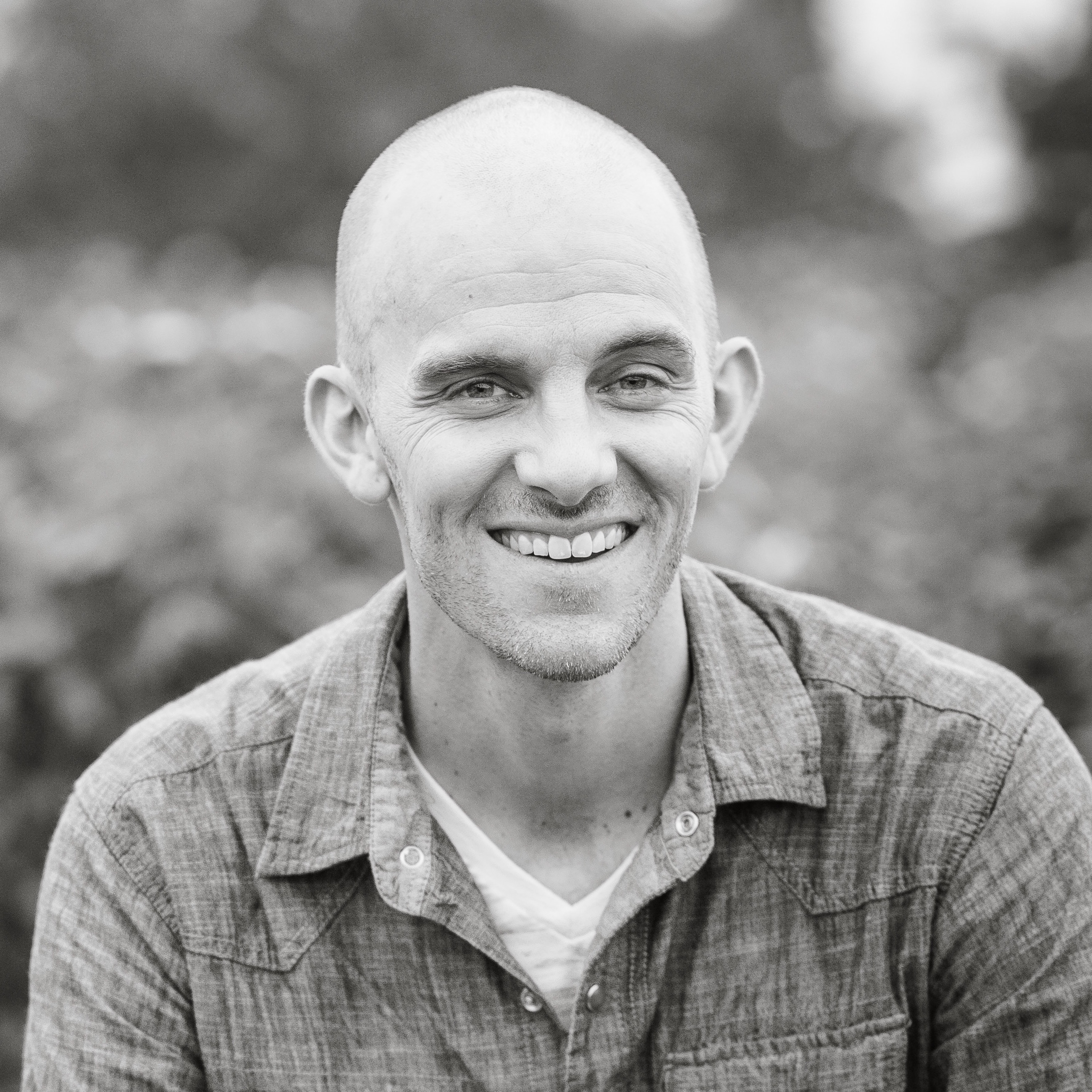
Eric Wenninger is an educator and writer. He teaches language and culture and writes about his thoughts and experiences here.