Tag: newsletter

  • More Friction, Please

    Last week’s newsletter was all about friction:

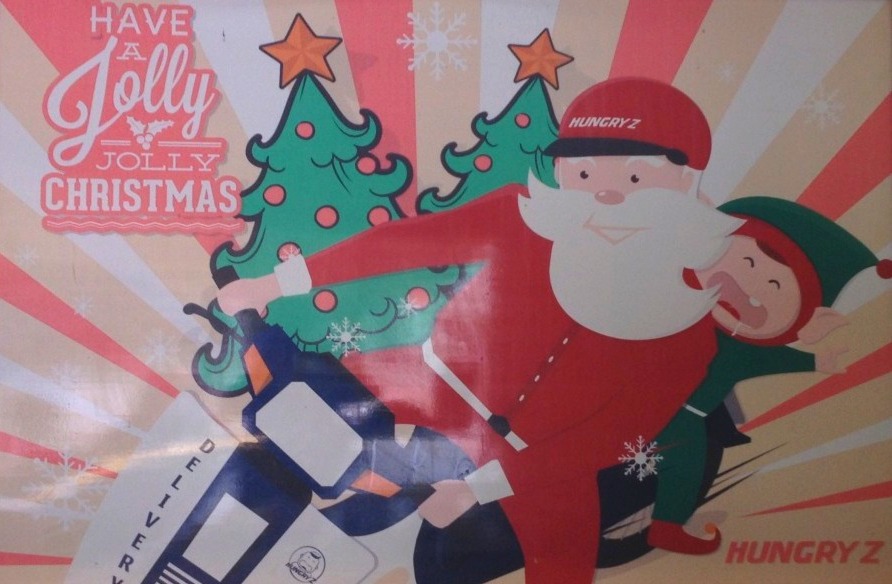
    It’s always difficult to spend the holiday season away from family and friends. You find yourself missing the traditions you’ve long held for this time of year, along with the special events and gatherings you look forward to with such anticipation. Your place in the world shifts and you have to deal with the friction the shift produces. One way is to bring the familiar into your new space—some Christmas tunes, favorite holiday movies, putting up a few recently bought decorations (instead of the beloved ones from the bins in your attic crawl space). Another way is to open yourself to how the holidays might be celebrated in your new place—spending unexpected time with new friends or observing the little changes in honor of the holidays happening around you.

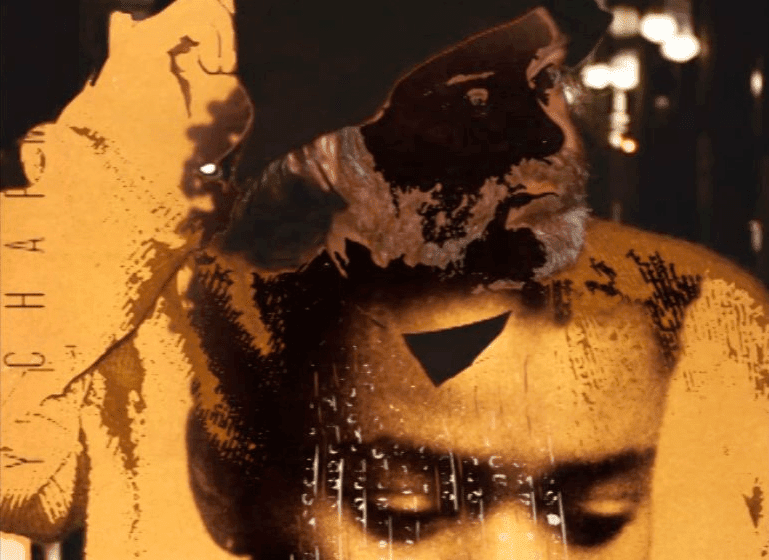
    I was thinking about friction this past week when I took a break from my comforting Christmas playlist and turned on Television’s song “Friction” from their album Marque Moon. Like so many forces in life, I started to process how friction can be both good and bad. So like Santa shimmying down the chimney, this week’s newsletter is gonna involve some friction.

    You can read the whole newsletter here.

    In Television’s song “Friction” (from the excellent Marque Moon), Tom Verlaine sings, “You complain of my diction. You give me friction” while cleverly pausing for a noticeable moment between “dic” and “tion.”

    Innuendo aside, I think we need more friction. Our world tries so hard to reduce it. Get there faster. Buy it more easily. Watch it whenever you want. Our convenience culture often leaves us feeling disoriented, reaching for something solid to hold onto. The rapid pace of it all can cause us to become desensitized to the richness of all that life has to offer—blinded to what is truly valuable.

    Friction can help us slow things down—see things more clearly. It can help make things a little harder so that we’re forced to grow. And it can also set up limits for us—limits that surprisingly make life more enjoyable.

    I remember reading this Guardian article around the time I started getting into vinyl. In the article, Jeff Tweedy discusses why the album still matters in an age where you can just as well download individual songs from iTunes. While discussing the album Sukierae that he and his son Spencer released back in 2014, Tweedy says:

    I just want to listen to the album and have a feeling that one part has ended, and now I can take a little breather before I listen to the second part. Or I can listen to the second part another time. It’s a double record on vinyl, so there are three breaks like that. I wanted it to have different identities artistically and the album format allows me to do that.

    Listening to music on vinyl brings intentionality to the listening experience. There’s more friction compared to streaming an endless playlist on Spotify. You have to pay attention to when the record is finished, get up out of your seat, physically flip it over or change it, go sit back down. Changing the record requires even more friction—you take the record off the turntable, put it back in its sleeve, take a new record out of its sleeve, place it on the turntable, and so on. If you want to keep listening, you have to take all of these steps all over again. The intentionality brings mindfulness.

    I also think of watching holiday specials when I was a kid. Each December, we use to pull out our living room hide-a-bed and lie down under it to watch A Charlie Brown Christmas. The idea of a holiday special is mostly lost on us today, but we can still add some friction into the mix to bring the “special” back. Rather than binge-watching a show, pick a night and watch one episode weekly. Showing some restraint and delaying satisfaction makes you appreciate it the show a lot more. Like listening to vinyl, it also might help you watch the show more mindfully.

    This is true of a lot of things when you think about it. It’s the reason seasons are so cool. The season changes and you have to wait a whole year to see it again. As a result, you appreciate it a lot more when it finally comes around. Limiting yourself to eating out once a month makes that night a whole lot more special than if you eat out every night.

    Friction can create more mindfulness and enjoyment for us, but it has an enemy: efficiency. In his book The Creative Act: A Way of Being, Rick Rubin writes about the dangers of our efficiency-based culture:

    Our continual quest for efficiency discourages looking too deeply. The pressure to deliver doesn’t grant us time to consider all possibilities. Yet it’s through deliberate action and repetition that we gain deeper insight.

    Friction allows us to look deeper, but the cost of it is time. Where do you have time to sacrifice efficiency and gain the benefit of deeper insight?

    In the summer of 2023, I took a lot more time when I chose to bike from Wausau to Eau Claire (a journey that ended up being 120 miles) to see a late night concert at the Blue Ox Music Festival. There was certainly a lot more friction for me riding my bike than driving my car. It was a lot harder! But, I gained a great deal from the experience. When I arrived, Them Coulee Boys were singing “Ten Feet Tall,” and that’s just about how I felt.

    Entering Eau Claire County
    Feeling 10 ft. tall in front of the porta potties

    There are so many ways you can add some more friction to your day. And the benefits are many—you get to know yourself better, you grow as a person, and you live with more intention. Ultimately you decide what is important to you rather than letting someone else determine that for you. Life becomes a lot more meaningful and satisfying as a result.

    This week I was listening to Francis Quinlan’s song “Another Season,” and I caught the word “friction” in the opening verse. It struck me as a good way to close out the end of another year:

    Hey
    Nothin’ much, just
    Wrappin’ up another season
    What do you make of this town?
    Here I have been taking the long way around
    Do you, like me, keep closest to the most familiar friction?

  • Branching Realities

    Last week’s newsletter was about branching realities.

    It started out like this:

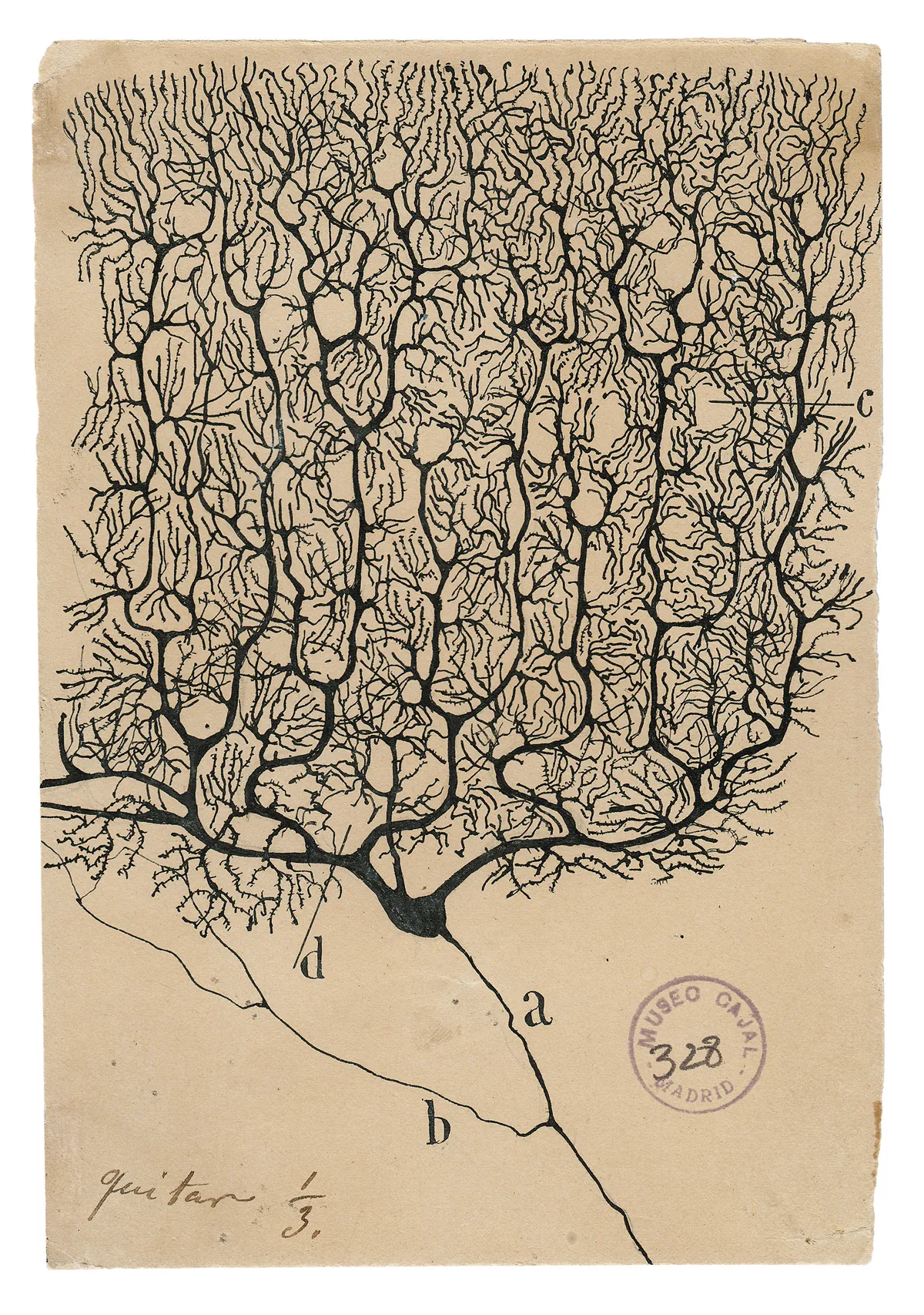
    Lynda Barry is a cartoonist and professor at UW-Madison who teaches a class called The Unthinkable Mind. In the class, Barry combines neuroscience, psychology, and drawing to help students build the skill of creativity and apply it to their life’s work. Last week I saw this Instagram post by Barry and it reminded me of the incredible link between art and science. Santiago Ramón y Cajal, widely considered to be the father of neuroscience, also understood this connection. Cajal’s work drew inspiration from both the sciences and the arts, and his drawings of the brain beautifully communicate its complexities.

    In addition to his work on circle visualizations, Manuel Lima has also worked with branching. In The Book of Trees: Visualizing Branches of Knowledge, Lima documents the use of tree diagrams from throughout history to categorize a wide variety of information:

    I like how this work is both artistic and scientific. Referencing visuals and producing them ourselves has always helped us understand the world better. Branching in particular is helpful, I think in part, because it’s all around us. Its reproductions and reflections are seemingly endless, as Barry’s lesson plan highlights.

    I’ve enjoyed watching Angie study medicine these past few months. To me, her notes look like works of art to and I’ll often ask her to send me pictures of them, like this one, which of course reveals some branching:

    Angie’s notes

    As we wrap up 2024, thinking about branching has me thinking a lot about the big decisions we make in life. Looking into our past, we might envision a fork in the road that was created in the moment of deciding—one path branching off to the left and another off to the right, each leading to a separate reality that was created by our choice.

    Or maybe we can envision a separate reality that was created simply by circumstance, as is the case in the 1998 movie Sliding Doors, where Gwyneth Paltrow’s character experiences two alternate realities based on whether or not she successfully catches a subway train. Throughout the rest of the movie we see her life play out along these two separate paths.

    The idea of alternate realities has always fascinated me. Even more fascinating is the theory suggesting they may actually be real. The many-worlds interpretation of quantum mechanics proposes that every possible outcome of every event creates a new universe or world that runs parallel to our own. Physicist Aaron O’Connell talks about the feasibility of this idea in his 2011 TED Talk.

    Alternate realities have long been the subject of some of the best science fiction. If you love speculating about these branching realities as much as I do, here are some great stories to check out:

    Ted Chiang has a short story entitled “Anxiety Is the Dizziness of Freedom,” from his book Exhalation, that looks at this idea. It’s somewhat of a redemption story in which characters use a device called a prism that allows them to communicate with versions of themselves from alternate realities—realities that stem from divergent past decisions the characters have made. You may already be familiar with Chiang’s work from the movie Arrival, which was based on his short story “Story of Your Life,” from Stories of Your Life and Others. It dawned on me that one of my family’s favorite holiday movies, It’s a Wonderful Life, also deals with alternate realities. Blake Crouch’s book Dark Matter (recently made into an Apple+ series) was first described to me as an “It’s a Wonderful Life” for the 21st century. And then, of course, there’s a wealth of amazing works by the Spanish-speaking world that dive into choice and the alternate realities it produces. Check out Jorge Luis Borges’s “The Garden of Forking Paths” (also see this TED Ed video on his mind-bending work) and the Spotify podcast Case 63 (based on the Chilean Caso 63).

    You can read the whole newsletter here.


  • Circles

    Last week’s newsletter was all about circles.

    It started off like this:

    They’ve been on my mind as of late. Maybe it’s because I’ve been listening to Mac Miller’s album Circles, or because I just read an essay by Ralph Waldo Emerson called Circles. Maybe it’s because there was just an election and it seems as though there are some people within my circle and some outside of it. Then again, maybe it’s the circular movements around me—the changing of the seasons or the cycling of the moon. Whatever the reason, I hope you read on and find something you’d like to circle and add to your list of things to check out.

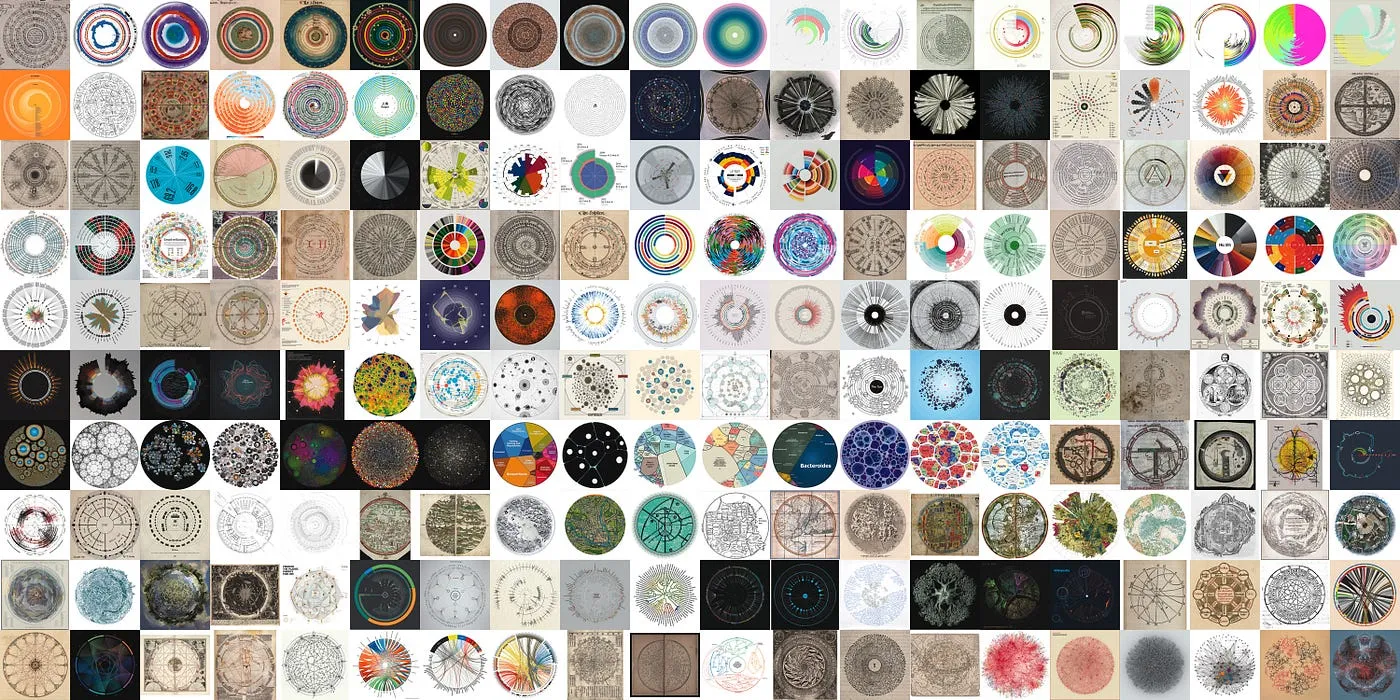
    Circles are everywhere. Just ask Manuel Lima, who documented them in The Book of Circles: Visualizing Spheres of Knowledge:

    In his essay Circles, Emerson writes:

    The eye is the first circle; the horizon which it forms is the second; and throughout nature this primary figure is repeated without end. It is the highest emblem in the cipher of the world. St. Augustine described the nature of God as a circle whose centre was everywhere, and its circumference nowhere. We are all our lifetime reading the copious sense of this first of forms.
    (…)
    Our life is an apprenticeship to the truth, that around every circle another can be drawn; that there is no end in nature, but every end is a beginning

    It made me think about circle stories I’ve read or seen, where the ending circles back around to the beginning, like in the movie 12 Monkeys. I recently learned that 12 Monkeys was based on the 1962 French film La Jetée, a minimalist 28-minute movie consisting of nothing more than 422 photos, a voiceover, and a score. This video provides a beautiful analysis of the film that doesn’t move (yet still moves in a circle):

    You can also draw circles around circles, and zoom in and out on them. I thought about how Prezi allows you to do this and it led me to compare Joni Mitchell’s song “Both Sides Now” with something Walt Whitman wrote in Leaves of Grass:

    Do I contradict myself?
    Very well then I contradict myself,
    I am large, I contain multitudes.

    Mitchell zooms out to find differing perspectives while Whitman zooms in to also find differing perspectives. Whether you zoom in or out, life is still complex.

    You can read the whole newsletter here.


  • Beautiful Puerto Rico

    When I was in college, I took a semester-long class on the history of Puerto Rico. It was fascinating—such a rich and nuanced history, filled with the ongoing struggle of living through colonialism’s legacy, but also with the pride of overcoming it in the celebration of life as a Boricua, or Puerto Rican.

    Last week’s newsletter included the following with respect to Puerto Rico:

    You may have heard what the comedian said about Puerto Rico at the Trump rally that took place in Madison Square Garden on October 27. I wanted to share some resources that say otherwise. Puerto Rico Strong is a “comics anthology that explores what it means to be Puerto Rican and the diversity that exists within that concept, from today’s most exciting Puerto Rican comics creators.” Since Hurricane Maria devastated the island in 2017, all sales of the book have gone to support ongoing relief efforts. La Brega is a podcast from WNYC Studios that looks at the history and music of Puerto Rico. There are both English and Spanish versions of each episode. From the website:

    There’s no direct translation of la brega in English, but for Puerto Ricans, it’s a way of life. To bregar means to struggle, to hustle, to find a way to get by and get around an imbalance of power. It’s got a creative edge, a bit of swagger; as Puerto Rican scholar Arcadio Diaz has observed, it’s a word that belongs to the underdog.

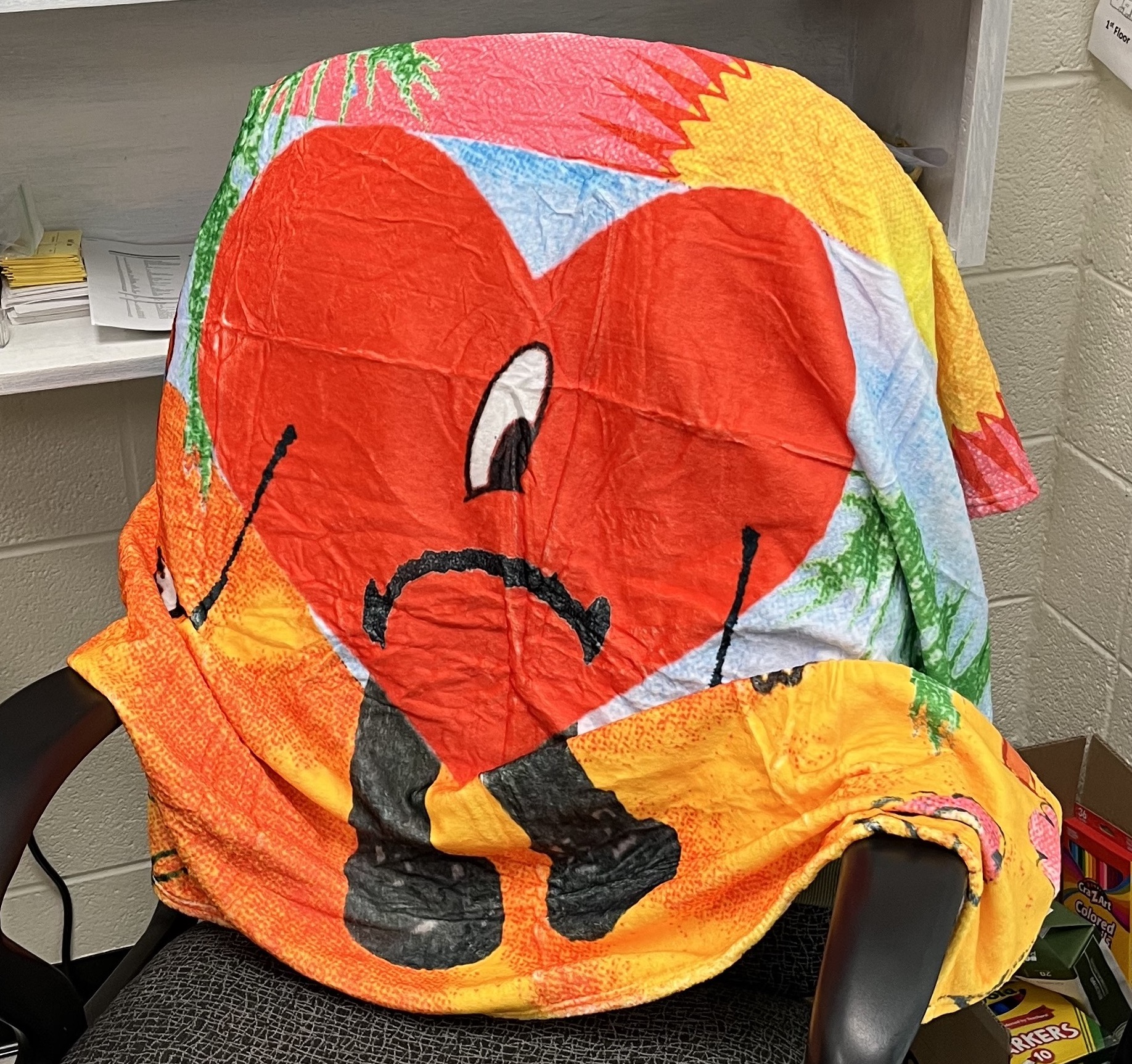
    A good example of la brega comes from Puerto Rican rapper Bad Bunny, who released El Apagón – Aquí Vive Gente (click on CC for English subtitles)—part music video, addressing the challenge of constant power outages while celebrating the pride of being Puerto Rican, and part documentary, addressing the dual problems of foreign real estate investments on the island and the reduction of public beach access. For further reading on the beautiful complexities of Puerto Rico, as often revealed through Bad Bunny’s music, check out The Bad Bunny Syllabus.

    You can read the whole newsletter here.


  • Halloween Suzuki

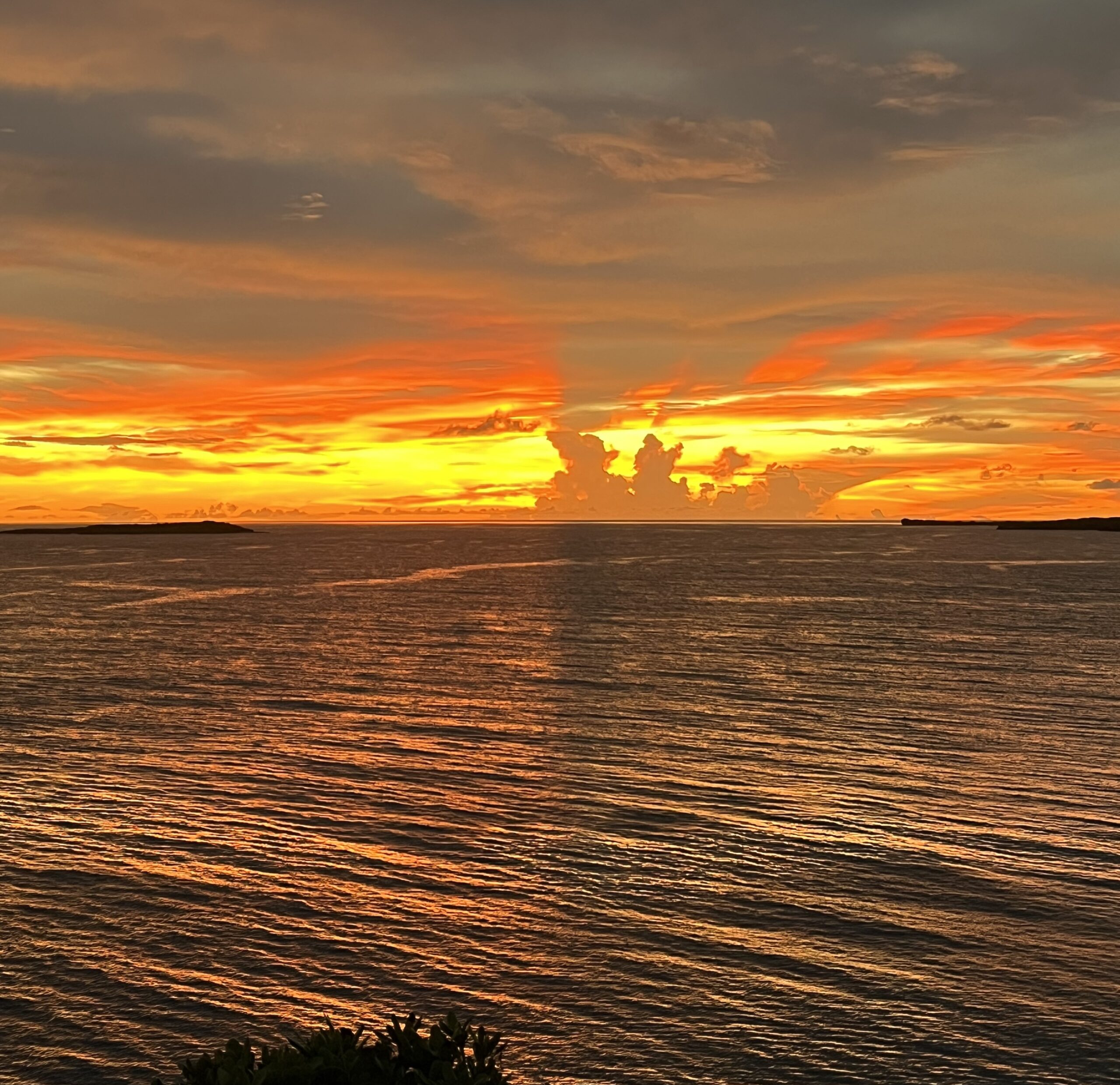
    Happy Halloween from Grenada!

    In last week’s newsletter, I suggested some scary shorts from the page and from the screen:

    One of my favorite times to be a teacher is during Halloween. I love incorporating eery music and stories into my classroom. I’ve played the music video for the song, “Drácula, Calígula, Tarántula,” by the Chilean sitcom, 31 Minutos (similar in content and esthetic to The Muppets). It’s a total vibe that you’ll pick up on even if you don’t speak Spanish. I will also use movies without any narration or dialogue in class, like Alma and Úlfur, and then work with students to build language around the story. Alma is a creepy animated short involving children and dolls, neither of which is creepy, right? Úlfur is another animated short that confuses the line between dream and reality in a circular fashion, reminiscent of two of my favorite short stories from Argentinian author, Julio Cortázar. Continuidad de los parques (English version) and La noche boca arriba (English version) were both introduced to me during my college days as a Spanish student. Both are well worth the read. Cortázar was a master of confusing what’s real and what’s fiction—perfect for Halloween!

    You can read the rest of the newsletter here.

    In other Halloween news, the following picture came up today as a Facebook memory from 2016.

    Cal Pumpkinhead from our Vietnam days

    Of course, we miss Cal and the fun of being around the hood tonight to hand out candy and play terrifying tunes for all the children. Angie and I are still planning on watching a scary movie or two though, be it tonight or tomorrow night. Studying is the horror consuming most of the time around here these days. Movies currently in the running are:

    • Beetlejuice Beetlejuice (2024)
    • I Saw the TV Glow (2024)
    • Coraline (2009)
    • It’s the Great Pumpkin, Charlie Brown (1966)
    • Harry Potter and the Half-Blood Prince (2009)

    Last but not least, I was finally able to put together a Halloween playlist for 2024, just in the nick of time! You can listen to it here.


  • O’Rourke’s Fast Car

    Last week’s newsletter started out with my post on contemplating blue. It wrapped up with an impromptu concert from Jim O’Rourke, featuring a 33-minute version of “Fast Car.” I wrote:

    I’m a big Jeff Tweedy fan, and “I celebrate the guy’s entire catalog”—especially the Wilco albums from the early 2000s, Yankee Hotel Foxtrot and A Ghost Is Born. At the time they were recorded, Tweedy was collaborating heavily with the musician and multi-instrumentalist, Jim O’Rourke. It was O’Rourke who first introduced Jeff Tweedy to Glen Kotche, Wilco’s current drummer who has been with the band ever since YHF. The three of them even formed a side project called Loose Fur that put out a couple of albums during those years. I was recently listening to an episode of NPR’s New Music Friday and learned about a 2002 impromptu concert that O’Rourke did in Japan. He was asked last minute to perform and had to piece together a set using borrowed instruments. I found a bootleg (if the Internet Archives site is down, you can still listen here) of the show, which closes with a beautiful cover of Tracy Chapman’s iconic song, “Fast Car,” one of my favorites. O’Rourke’s drone-infused and atmospheric version goes on for a whopping 33 minutes! In the days of streaming, it’s been a while since I’ve downloaded an album and had to go through the process of adding the files to my Mac’s music library and then transfer them to my phone via a USB cable. It was well worth it.

    Jim O’Rourke (via Cover Me)

    If ever you’re in need of some peace, I recommend kicking back and listening to the full set. You’ll be transported to another place, one where the mental noise inside your head begins to fade away.

    You can read the whole newsletter here.


  • Connecting from a Distance

    Last week’s newsletter discussed connecting from a distance. It started out like this:

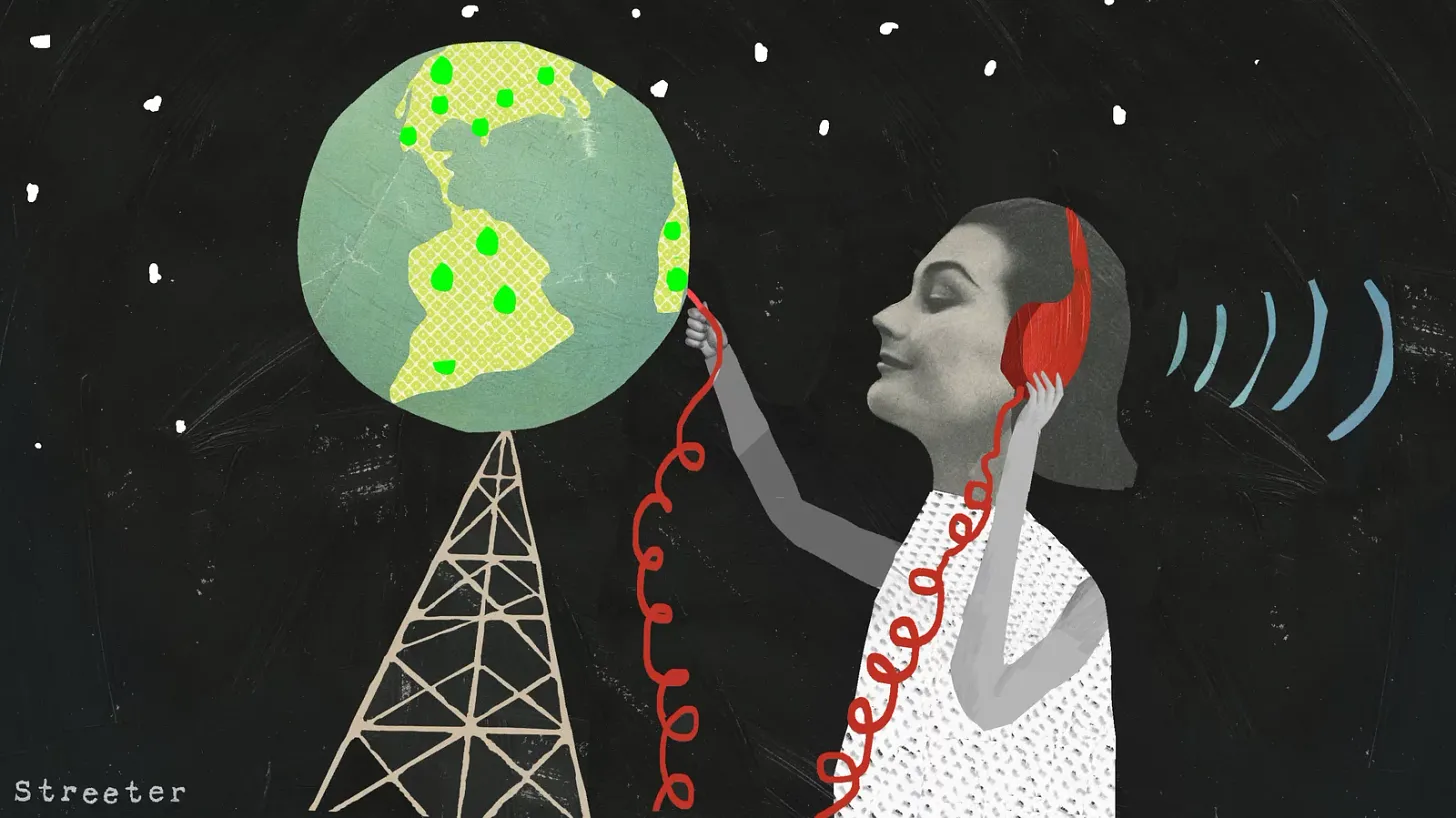
    I’ve been thinking a lot about the many ways technology helps people stay connected from a distance. I connect with people and places via music, so while living abroad, I’ll often stream The Current out of the Twin Cites or WXPR’s Northwoods Cafe out of Wisconsin’s northwoods. These are great ways for me to connect with the Midwest, a place I will always call home. I’m connecting to Grenada too, through music. Two great trends I’ve enjoyed about the music here: 1) popular songs that have been caribbeanized (think Simon & Garfunkel with steel drums), and 2) 80s/90s soft rock and R&B. There is a radio station here that I swear plays Luther Vandross at least 50% of the time. If you’d like to tune into Grenadian radio, I’m a big fan of Radio Garden (also an app), which allows you to stream radio stations from all over the world. You can explore the globe through an interface similar to that of Google Earth, each green dot representing a different radio station. This is how I discovered Interferencia IMER (Instituto Mexicano de la Radio), broadcasting out of Mexico City. I highly recommend it. They play a wonderfully eclectic mix of tunes. It was through Interferencia that I first learned about Green Bay Packers quarterback Aaron Rodgers being traded to the New York Jets. At the time I thought, “How appropriate is it for a Spanish teacher from Wisconsin to get big-time Wisconsin news from a Mexican radio station?”

    I also wrote about the moon and how it connects us to one another across great distances.

    Image from Thea’s Tree, by Judith Clay (via The Marginalian)

    You can read the whole newsletter here.


  • Crossing Thresholds

    Today’s newsletter is about crossing thresholds. It starts:

    Taking risks in life is hard. You have to cross the threshold between what is known, well-documented, and comfortable; and step into territory that’s foreign, obscure, and uneasy. Whenever I have started afresh in a new place, I tend to initially latch onto those things that make me feel comfortable, before fully stepping across that threshold. Music is a big help for me in this way and so is, it would seem, Harry Potter. When I studied abroad in Spain, I read the first Harry Potter book in Spanish before immersing myself in my new Spanish community. In anticipation of moving to Grenada, I bought a Kindle Paperwhite, which included a 3-month free subscription to Kindle Unlimited. The last book in the Harry Potter series was available to download so I’ve been enjoying the comforts of reading a beloved story every night before going to bed. It’s the perfect anecdote to the daily struggles that inevitably come with adjusting to life in a new place. I was reminded of several scenes that are missing from the movie version of the book, which prompted me to stumble upon this video that looks at two such deleted scenes.

    It continues:

    Both feature a character crossing a threshold, physically and symbolically, to meet another character where they are at. To take a risk and enter an unfamiliar space in an attempt to bridge differences and create a mutual understanding. I think it’s a great visual for reflecting on what thresholds we might cross, be they cultural, political, relational, or something else all together. Taking risks like these do not have to be enormous and completely life-altering. They can be small and achievable by anyone, anywhere. This makes them no less profound. I love this 72kilos post which provides another great visual for crossing thresholds.

    Translation: I think completely different than you, but that doesn’t prevent me from drawing near to you. Image by 72kilos.

    You can read the whole newsletter here.


ABOUT THE AUTHOR

Eric Wenninger is an educator and writer. He teaches language and culture and writes about his thoughts and experiences here.